Ritsart Gobyn
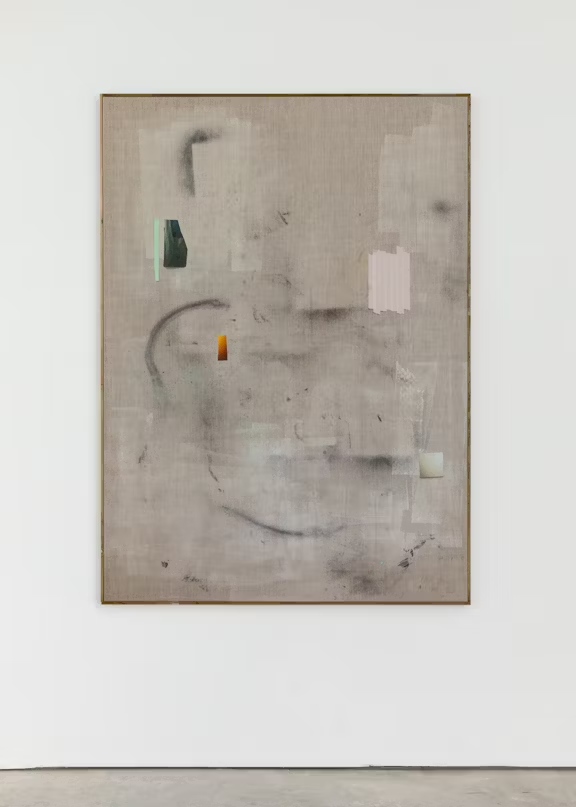
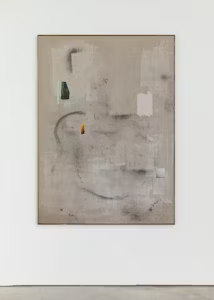
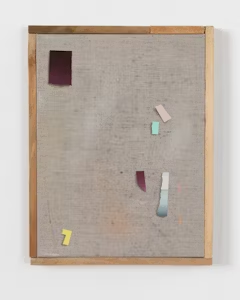
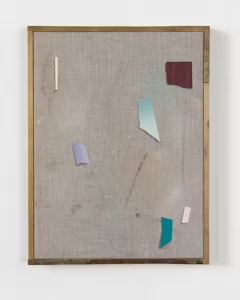
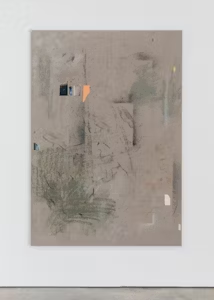
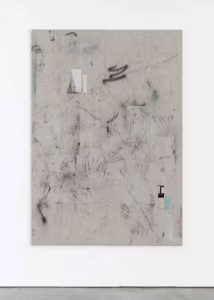
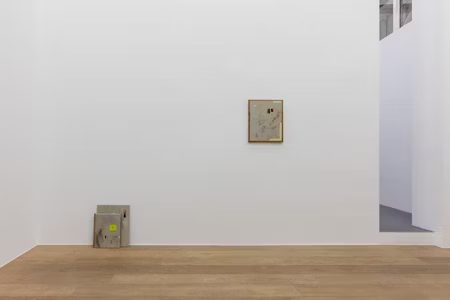
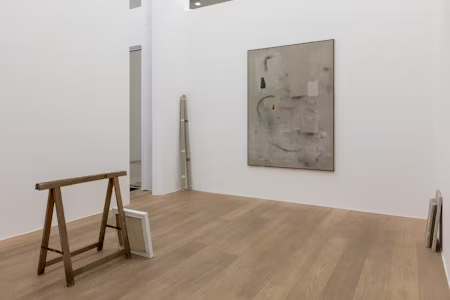
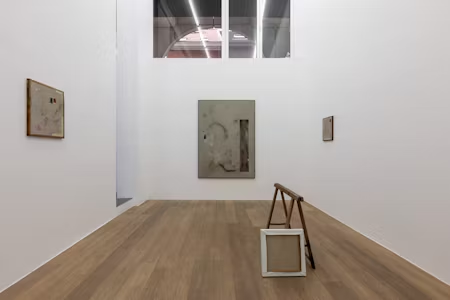
At first glance the paintings of Ritsart Gobyn appear to be a random assemblage of traces of a creational process. Drops and sweeps of paint, pieces of wood, tape and shreds of paper cover unprimed pieces of linen. Wooden remains are attached around it and function as a frame, which grants it the status of painting and suggests that it is finished. This work seems like a negation of the image. Or at least a parergon, a byproduct that arises in creating something else. The perception changes however when the pieces of tape and the shreds of paper appear to be small trompe l’oeils. A new negation arises, but this time a denial of the negation. What the spectator believed to perceive, appeared to be an illusion. The negation of the image emphasizes the image even more and pulls it into a pictorial esthetic context. It becomes (self)critical and at the same time esthetic, abstract and figurative, parergon and simultaneously ergon.